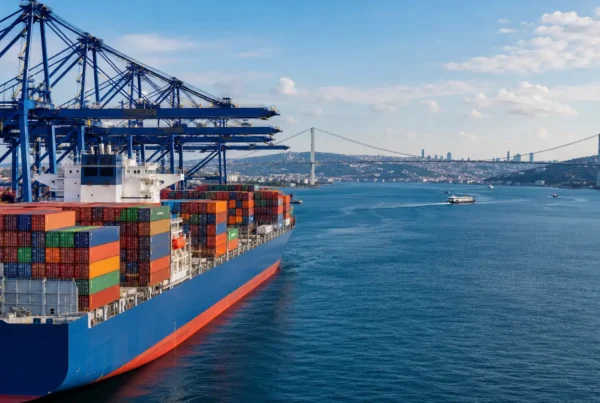
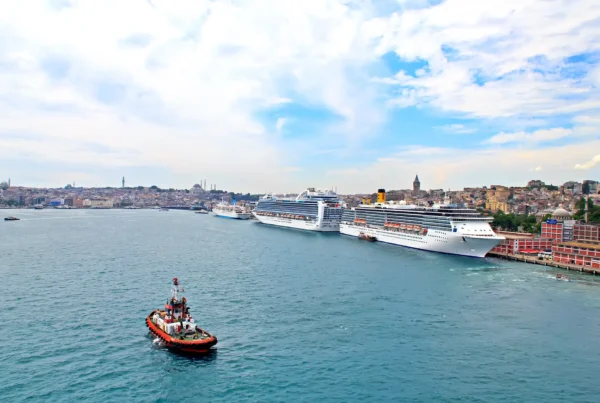
Overview of the Global Maritime Industry
December 2025 marked a transitional period for the global maritime industry, shaped by geopolitical dynamics, energy market volatility and accelerating environmental regulations. The shipping industry continued to adapt to structural changes that defined the post-pandemic era.
Red Sea, Suez Canal and Alternative Routes
Security concerns along key trade corridors kept routing decisions at the top of operational agendas. While the Suez Canal remained critical for global maritime trade, some shipowners continued to favor longer alternative routes, increasing voyage duration and bunker costs.
The International Maritime Organization (IMO) played a central role in coordinating safety and sustainability efforts across international shipping lanes.
Container Shipping Trends in December 2025
The container shipping market showed signs of stabilization toward the end of 2025. Carriers focused on capacity discipline to balance freight rates and operational efficiency.
Key highlights included:
-
Seasonal cargo increases from Asia
-
Improved port efficiency in Europe
-
Wider use of digital tools for port operations
Tanker and Dry Bulk Markets
The tanker shipping sector remained closely tied to global energy demand. Winter-season consumption supported ton-mile demand, while fleet supply continued to cap excessive rate increases.
In dry bulk shipping, iron ore and coal movements remained steady, driven by Asian demand.
Green Shipping and Decarbonization
December 2025 reinforced the importance of green shipping initiatives. In line with IMO targets:
-
Orders for alternative-fuel vessels increased
-
LNG, methanol and ammonia-powered ships gained traction
-
Investments in carbon reporting and efficiency expanded
Sustainability remained a strategic priority across the maritime industry.
Türkiye’s Maritime Sector in December 2025
Türkiye strengthened its position as a regional logistics hub. Container, Ro-Ro and transit cargo volumes showed resilience across major ports.
Regulatory and infrastructure initiatives led by the Ulaştırma ve Altyapı Bakanlığı and Denizcilik Genel Müdürlüğü supported competitiveness and operational efficiency.
Outlook for 2026
As the industry moved into 2026, priorities became clear:
-
Accelerated digital transformation
-
Stronger environmental compliance
-
Efficiency-driven investments in vessels and ports
The maritime industry closed 2025 with cautious optimism, preparing for a more sustainable and technology-driven future.